Predictive Analytics
Make decisions before problems occur, not after they've already affected your margins.
>
>
>
Predictive Analytics

Overview
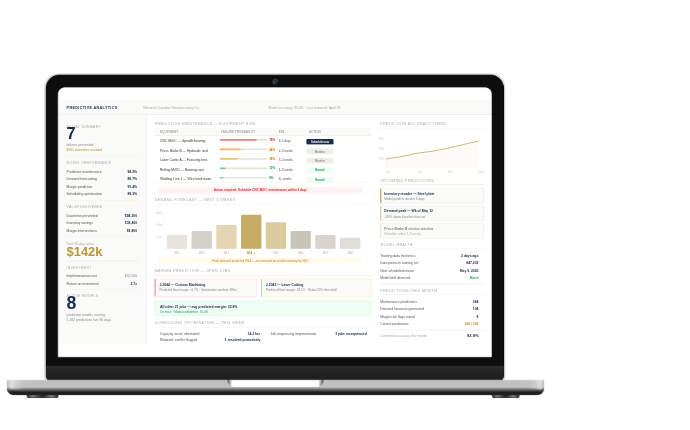
Our Predictive Analytics service builds AI models trained on your operational data, so your team can make decisions before problems occur, not after they've already affected your production, your margins, or your customers.
We don't sell generic prediction tools. Every model we build is trained on your data, tuned to your operational environment, and validated against your real business outcomes, so the predictions it generates are accurate for how your operation actually runs.
From equipment maintenance to inventory demand to production scheduling, predictive analytics replaces reactive decision-making with proactive intelligence. The patterns are already in your data. We build the system that reads them.
Whether you're starting with a single high-value prediction use case or building a full predictive intelligence layer, we start with your highest-leverage opportunity and build from there.
The Cost Of Reactive Decision-Making
Sales Challenge
53% of unplanned equipment downtime is preventable with predictive maintenance in place
Businesses without demand prediction carry an average of 42% more stock than necessary
Reactive production scheduling creates up to 37% capacity waste through inefficient sequencing
28% of margin risk on active jobs is identified too late to act on without predictive analytics
Without Predictive Analytics,
From equipment maintenance to inventory demand to production scheduling, your team keeps reacting to problems after they've already occurred. Predictive models trained on your operational data put decisions ahead of the problem, not behind it.
Predictive Analytics Benefits
Sales Challenge
Downtime Prevention:
Improve equipment reliability by identifying failure patterns before breakdowns occur
Inventory Accuracy:
Improve stock positioning by predicting demand before it materialises, eliminating overstock
Margin Protection:
Surface cost and margin risks on active jobs before they close in the red
Scheduling Efficiency:
Improve production capacity utilisation by eliminating reactive scheduling waste
Decision Confidence:
Improve decision confidence by replacing gut feel with data-backed predictions specific to your operation
Our Predictive Analytics Services

Predictive Maintenance
We build AI models that monitor your equipment data, identify patterns that precede failures, and alert your team before a breakdown occurs, so maintenance happens on your schedule, not the equipment's.

Demand & Inventory Forecasting
We build demand prediction models trained on your historical sales, production, and supply chain data, so your purchasing and inventory decisions are driven by what's coming, not what happened last month.

Production Scheduling Intelligence
We build AI scheduling models that predict capacity constraints, optimise job sequencing, and balance material availability against deadlines, reducing waste and improving throughput simultaneously.

Margin & Job Costing Prediction
We build predictive job costing models that flag margin risk on active jobs before they close, giving your team time to act on cost overruns while there's still an opportunity to protect the margin.

Customer & Demand Intelligence
We build models that predict customer demand patterns, seasonal peaks, and churn risk, so your business can position itself ahead of demand rather than reacting to it after the fact.

Model Monitoring & Refinement
Predictive models need ongoing care as your operation evolves. We monitor model performance, retrain on new data, and refine predictions to ensure accuracy stays high long after initial deployment.
Platforms We Build Predictive Models On
Microsoft Azure Machine Learning
AWS SageMaker
Google Cloud AI
Python / scikit-learn
TensorFlow
Your existing ERP, production, and operational data sources
Built For Western Canadian Industry
Manufacturing & Fabrication
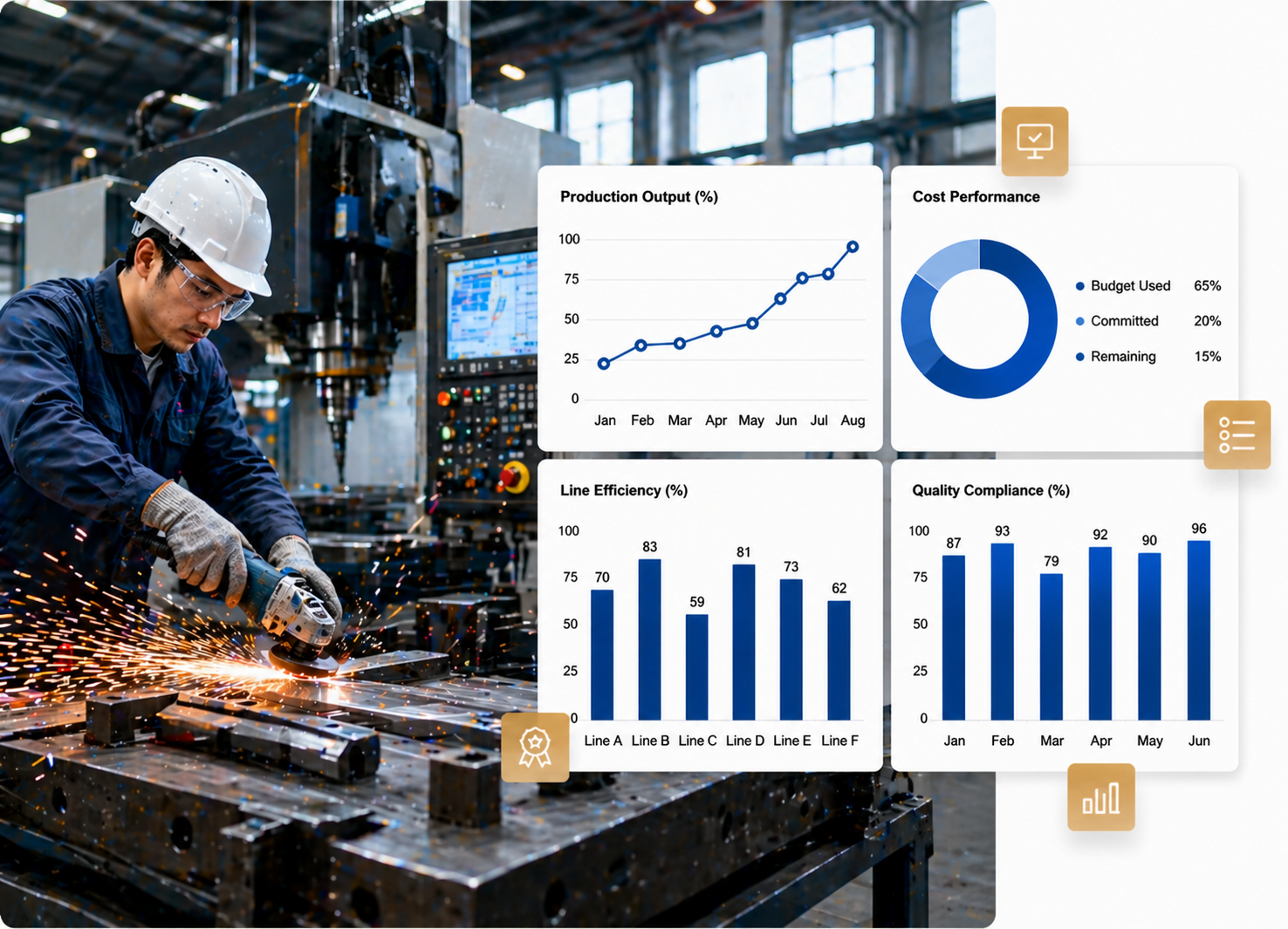
Predictive maintenance models trained on equipment sensor and performance data to prevent unplanned downtime
Production scheduling intelligence that predicts capacity constraints and optimises job sequencing automatically
Job costing prediction that flags margin erosion on active jobs before they close in the red
Material demand forecasting that predicts consumption based on production schedules and historical usage patterns
Construction & Trades
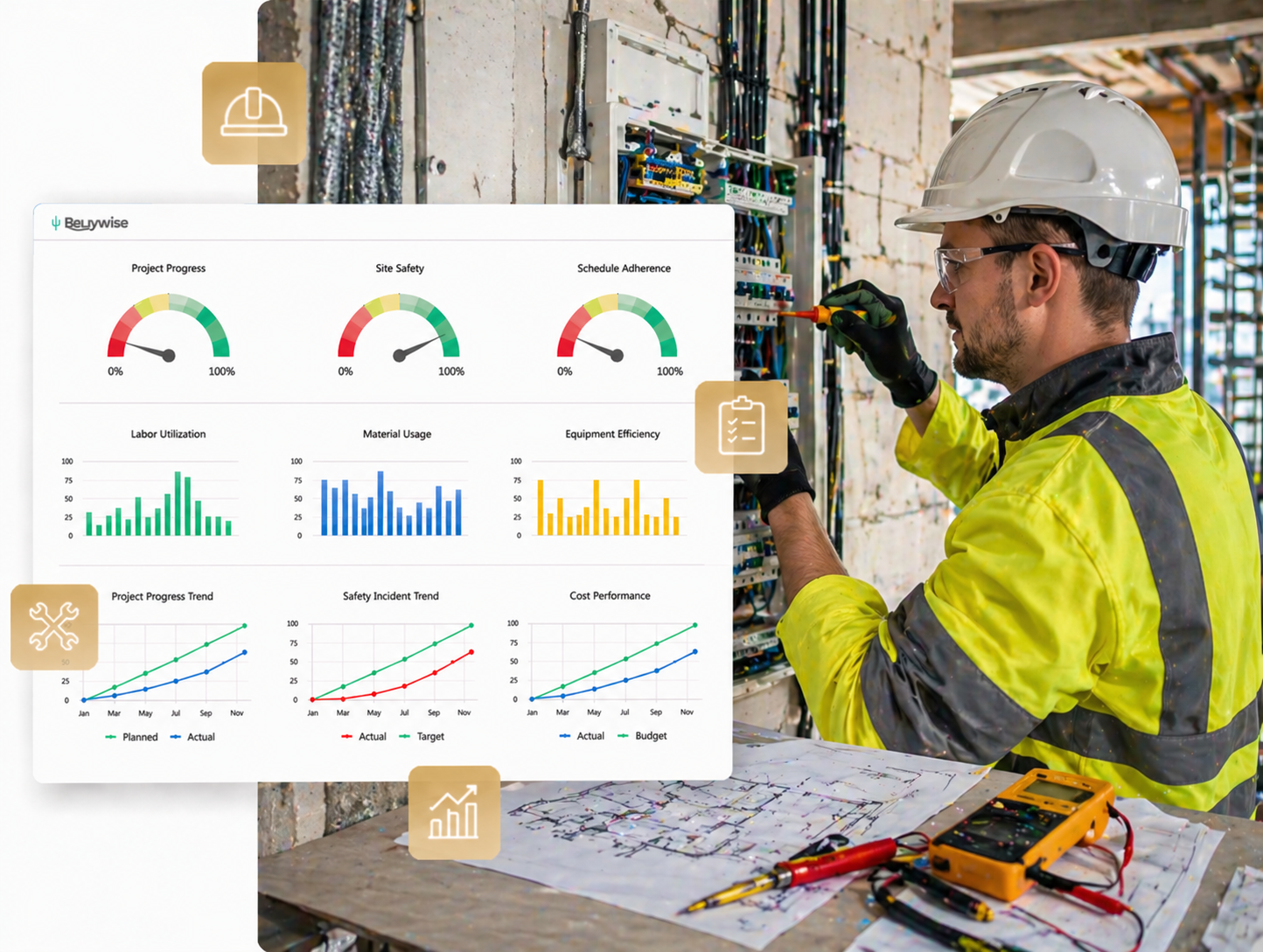
Project profitability prediction that surfaces cost overrun risk on active jobs before they affect the final margin
Resource demand forecasting that predicts crew and equipment requirements across upcoming projects
Subcontractor performance prediction that identifies risk on active contracts before delays materialise
Estimating accuracy models that predict margin outcomes at quote stage based on historical job performance data
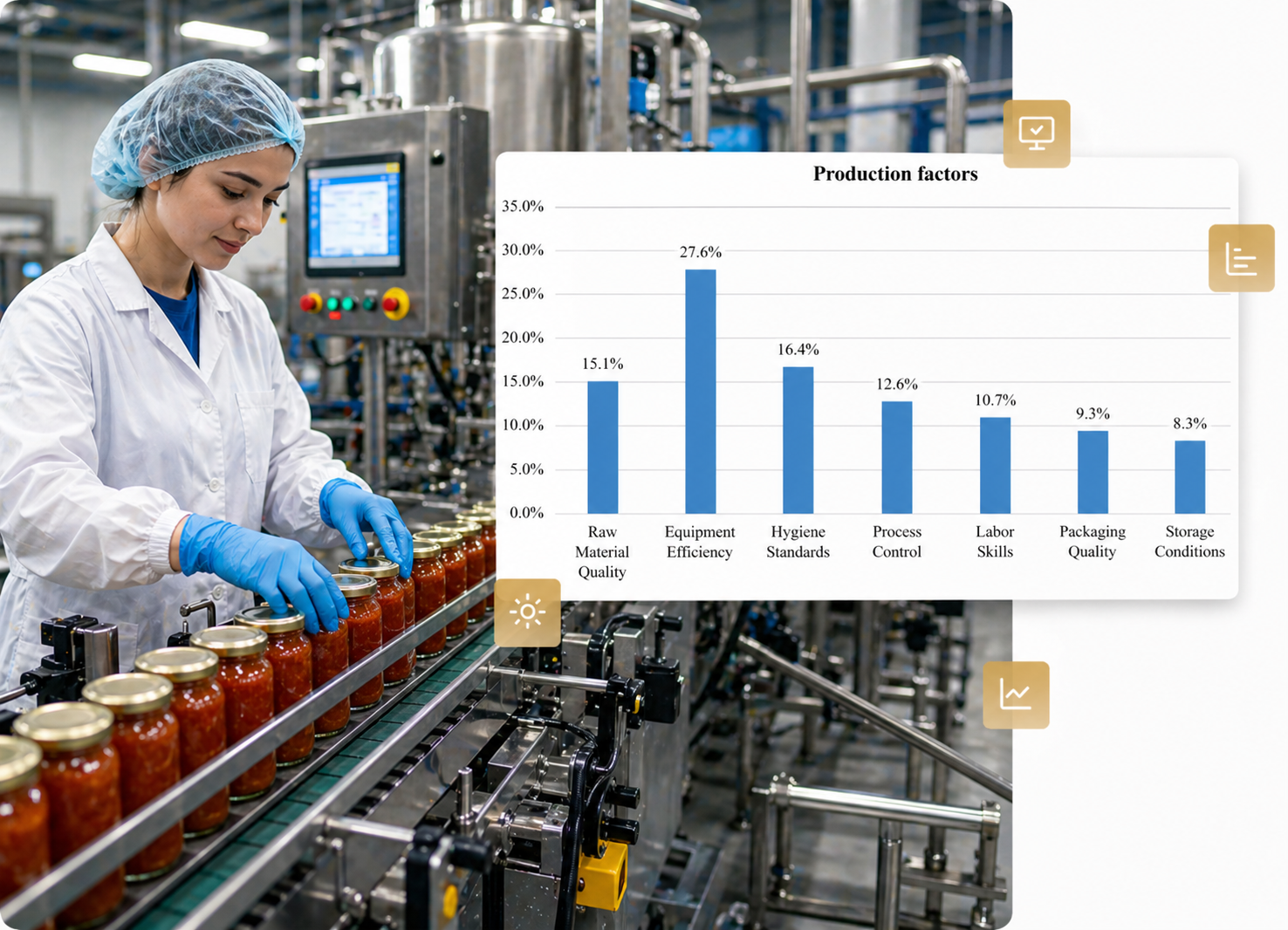
Food Production & Processing
Demand forecasting models that predict production requirements based on customer orders and historical seasonal patterns
Equipment and line performance prediction that identifies maintenance requirements before production is affected
Quality deviation prediction that identifies batch and process conditions likely to produce non-conforming product
Inventory and raw material demand forecasting that predicts purchasing requirements across the supply chain
Not sure which predictions would create the most value in your operation?
Use our free 5-minute assessment to identify your highest-value prediction use cases — based on your industry, your data, and how your operation actually runs.
Not sure what automation features you need? Use our free recommendation tool to discover the features that match your business needs in under 2 minutes.
How We Implement Your Predictive Analytics Solution
Every predictive analytics engagement follows our proven AI Implementation process — from data assessment and model design through to live predictions and ongoing refinement:

AI Readiness Assessment
We evaluate your current systems, data quality, and operational workflows to identify exactly where AI can deliver immediate impact and where the foundation needs work first.

Solution Design
We design your AI system from the ground up built around your specific operation, your data structures, and the outcomes your business needs. No generic templates.

Pilot Implementation
Before full deployment, we run a controlled pilot on your highest-priority use case. You see real results in your real environment before any larger commitment.
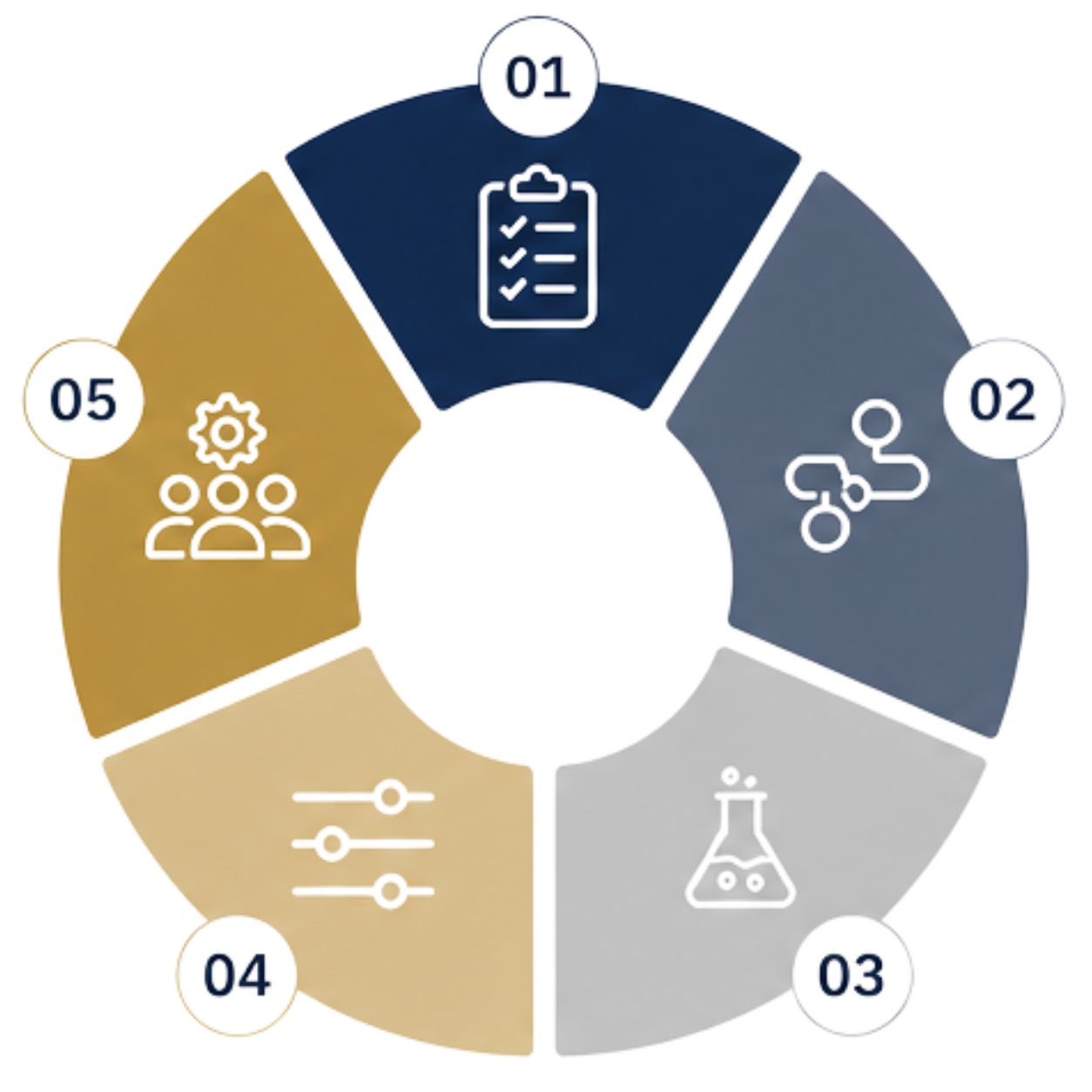

Optimization
We refine based on what the pilot data shows improving accuracy, expanding coverage, and adjusting the system to match how your operation actually behaves.

Full Deployment & Enablement
We roll out across your operation and train your team to work with the system confidently ensuring adoption is as strong as the technology itself.
Common Questions About Predictive Analytics
How accurate are the predictions?
Accuracy depends on the quality and volume of your historical data and the complexity of what's being predicted. We validate every model against held-out data from your environment before deployment and publish accuracy benchmarks for each use case. Most production models achieve 85–95% accuracy within the first 60 days.
How much historical data do we need?
It depends on what we're predicting. Predictive maintenance typically requires 6–12 months of equipment data. Demand forecasting works well with 18–24 months of sales and production history. We assess your data availability during the readiness evaluation and tell you clearly what each use case requires.
What if our predictions turn out to be wrong?
Every model includes uncertainty quantification, so your team knows the confidence level behind each prediction, not just the prediction itself. We also build in monitoring that flags when model accuracy degrades, so we can retrain before it affects your decisions.
How does predictive analytics connect to our existing reporting?
We integrate predictive outputs into your existing dashboards and reporting wherever possible, so predictions surface in the tools your team already uses, not in a separate platform they have to remember to check.
Is AI practical for an owner-operated business our size?
Yes — and the opportunity is larger for mid-sized owner-operated businesses than most people realize. Large enterprises have been using AI for years. The same capabilities are now accessible at a fraction of the cost, and businesses with 20–200 employees often have more flexibility to implement quickly than larger organizations do.
Do we need to replace our existing systems to implement AI?
Not necessarily. In most cases we work with what you already have connecting AI capabilities to your existing ERP, job management, or production systems. If your current systems genuinely can't support what's needed, we'll tell you that clearly and propose a phased approach.
How long before we see results?
Pilot implementations typically deliver measurable results within 2–4 weeks. Full deployment timelines depend on scope, but most clients see meaningful operational impact within 60–90 days of engagement start.
What kind of data do we need to have in place?
You don't need perfect data, almost no business does. But you do need data that's accessible, reasonably consistent, and connected enough to work with. Our AI Readiness Assessment tells you exactly where your data stands and what, if anything, needs to be addressed before implementation.
Can AI integrate with legacy systems like older ERPs or industry-specific software?
In most cases, yes. We have experience connecting AI capabilities to legacy environments. If a legacy system genuinely can't be integrated, we'll tell you that during the assessment, not after you've committed to an implementation.
Ready To Make Decisions Before Problems Occur?
Start with a free business audit. We'll identify your highest-value prediction use cases and tell you exactly what your data is ready to support right now.
Proud Member Of













Building intelligent businesses across Western Canada — one system at a time.


Services
Solutions
Resources
The Inthera Network
Get Started
Copyright 2026. Inthera Consulting Group. All Rights Reserved.